When planning an office renovation or office fit-out, one important decision needs to be made before construction begins:
How should the project be delivered?
Two common approaches are Design & Build and Traditional Tender.
Both can deliver successful projects, but they differ in how design, cost, programme and responsibility are managed. Choosing the right approach depends on your business priorities, project complexity, timeline and procurement requirements.
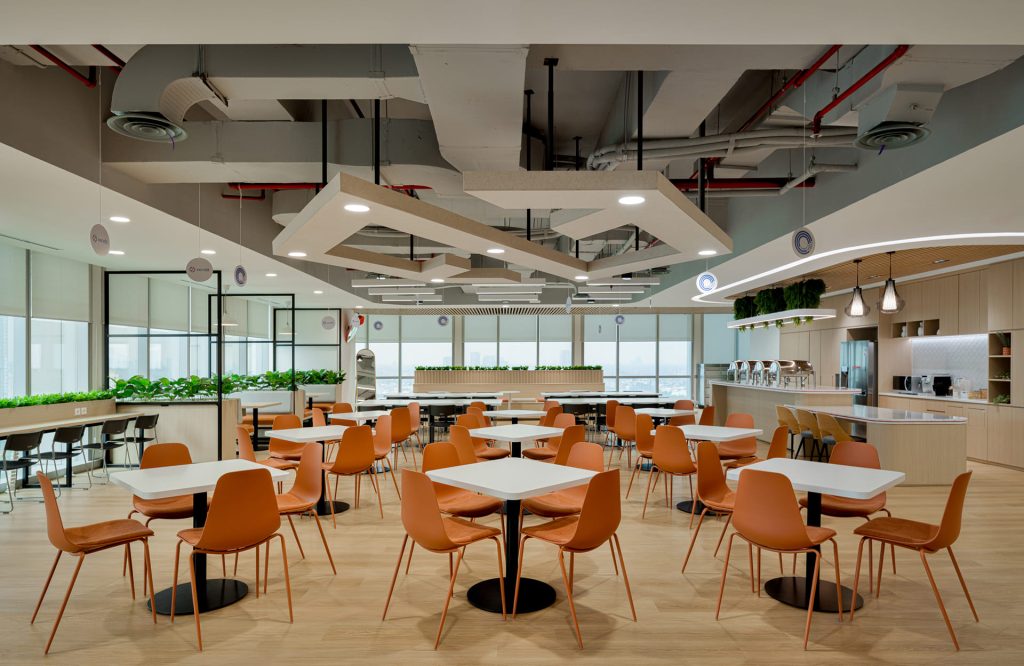
What Is Traditional Tender?
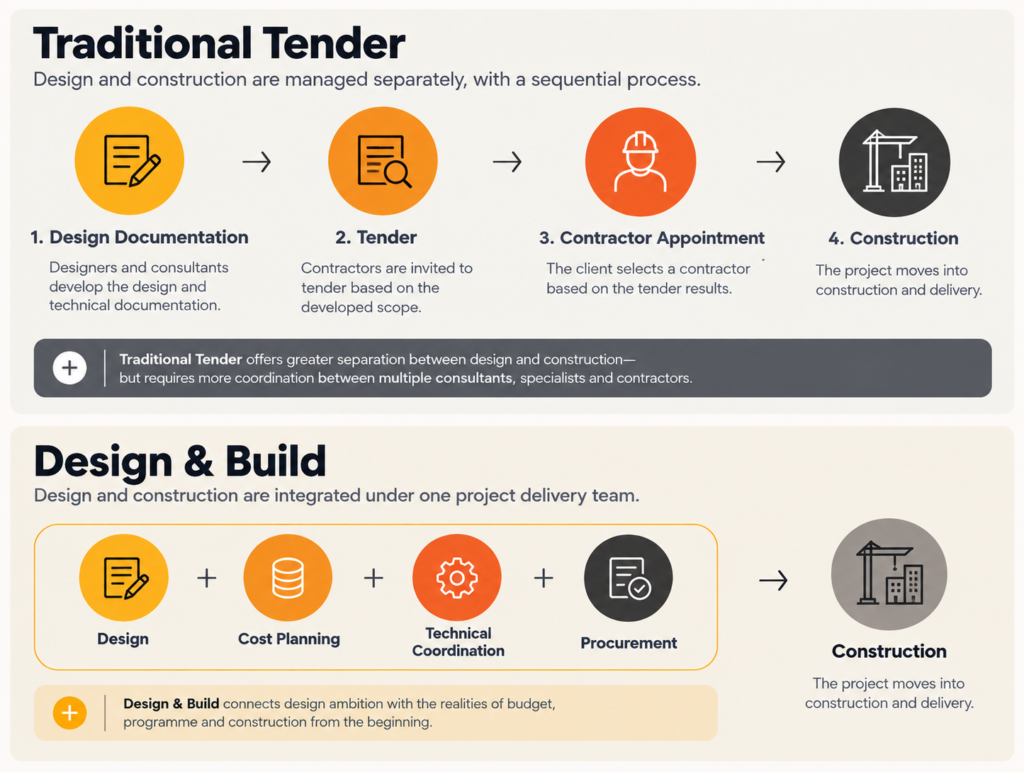
Under Traditional Tender, design and construction are generally managed separately.
The client first appoints designers and consultants to develop the design and technical documentation. Contractors are then invited to tender based on the developed scope.
This allows businesses to compare competitive construction prices and retain independent design consultants.
However, because design, tender and construction generally happen in sequence, the overall programme can be longer. The client may also need to coordinate across multiple consultants, specialists and contractors.
Traditional Tender offers greater separation between design and construction—but requires more coordination between parties.
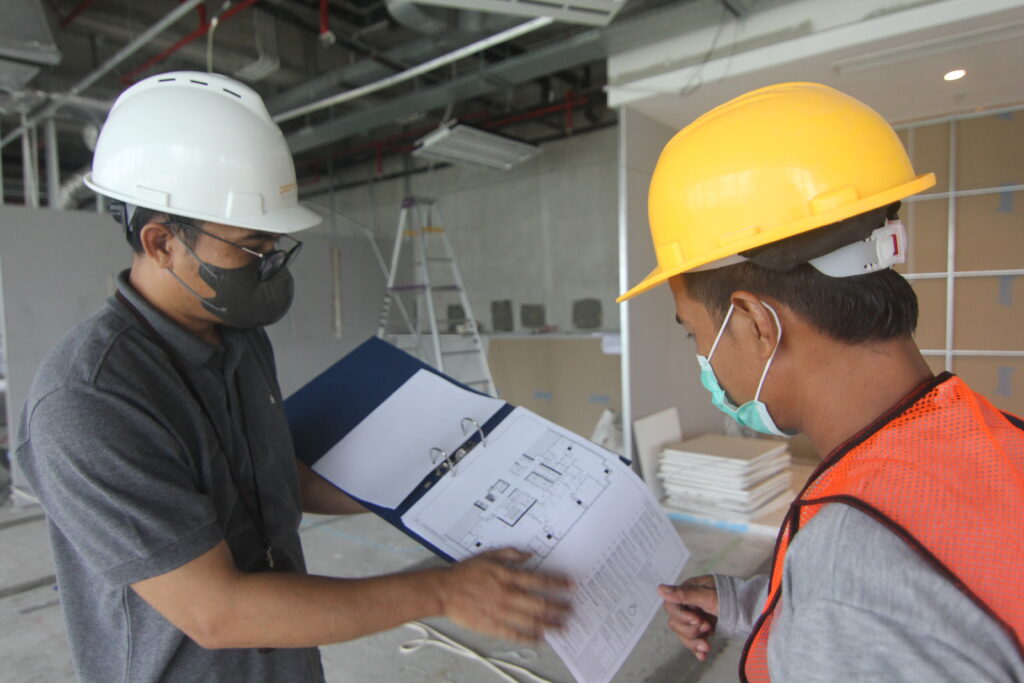
What Is Design & Build?
With Design & Build, design and construction are integrated under one project delivery team.
Design development, cost planning, technical coordination, procurement and construction planning can progress together rather than as completely separate stages.
For an office renovation or office fit-out, this allows cost, buildability, programme and material availability to be considered earlier.
It also provides the client with a clearer single point of responsibility from concept through completion.
Design & Build connects design ambition with the realities of budget, programme and construction from the beginning.
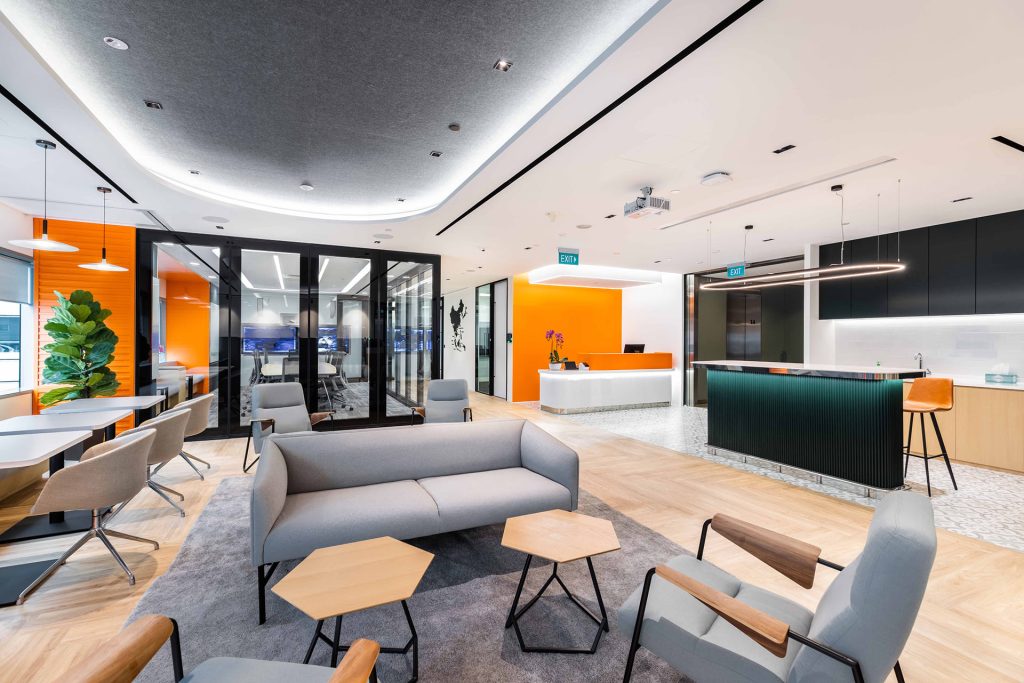
Why Do Companies Choose Design & Build?
One of the biggest advantages is early collaboration.
Every design decision eventually affects cost, technical requirements, procurement and construction.
By bringing designers, project managers, cost specialists, M&E teams and construction teams together earlier, potential challenges can be identified before they become costly problems on site.
Materials can be reviewed against budget and lead times. Technical requirements can be coordinated earlier. Alternative solutions can also be explored while the design is still developing.
This isn’t about compromising design.
It’s about designing with delivery in mind.
For businesses working towards a fixed lease expiry or move-in date, an integrated Office Design & Build approach can also help streamline the overall project programme.
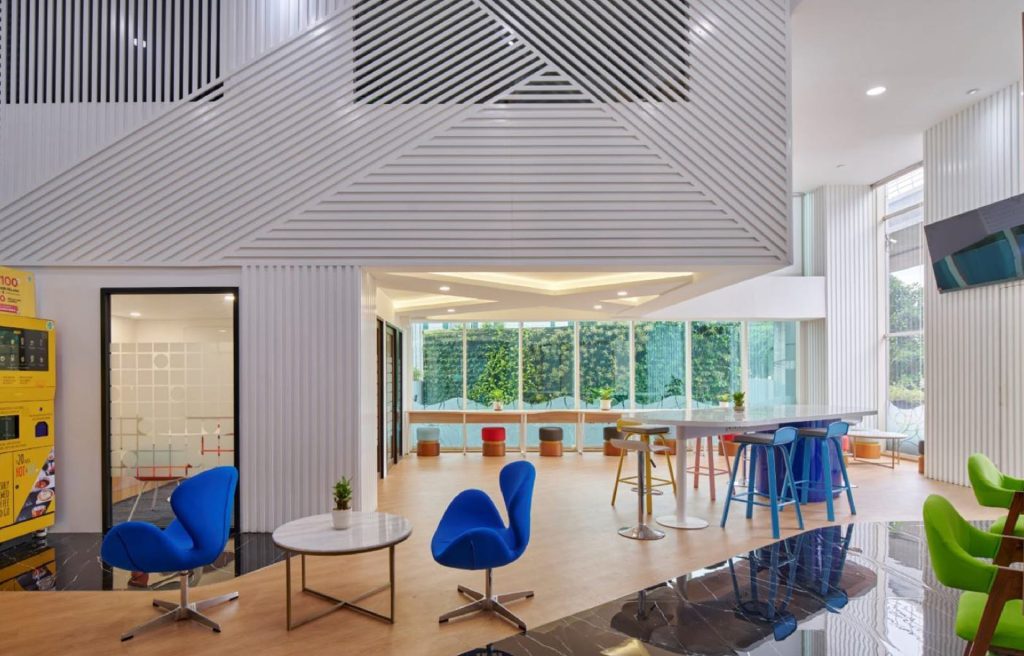
When Is Traditional Tender the Better Choice?
Design & Build isn’t automatically right for every project.
Traditional Tender may be more appropriate when an organisation requires independent design consultants, wants the design fully developed before contractor appointment, or has formal procurement requirements for competitive construction tenders.
Some businesses may also prefer independent consultants overseeing different project stages as part of their internal governance.
So the question isn’t:
Which method is better?
It’s:
Which method is better for your project?
Cost and Programme Matter
Traditional Tender allows contractors to price against a developed design. But the lowest tender price doesn’t necessarily mean the lowest final project cost if variations, coordination issues or design changes arise later.
With Design & Build, cost planning can develop alongside the design, allowing decisions to be continually reviewed against the project budget.
Programme can also be different.
This can be particularly valuable for office fit-out and office renovation projects with fixed completion or move-in dates.
Neither approach eliminates project risk. The objective is to identify and manage those risks at the right stage.
Which Approach Is Right for Your Office?
There is no single answer.
If your organisation values independent consultants, a fully developed design before tender and formal competitive procurement, Traditional Tender may be appropriate.
If your priorities are early cost alignment, programme efficiency, integrated coordination and a single point of responsibility, Design & Build may offer greater advantages.
The right delivery strategy should ultimately support your business objectives, budget and programme—not simply follow the approach used on previous projects.